
Lineage-Based Entity Resolution: Solving Cross-Domain Identity
One individual can have records scattered across medical clinics, tax ledgers, land registries, and census databases. In standard systems, linking these records requires creating a central, monolithic database of raw personal data. This violates privacy laws, breaks data ownership rules, and creates immense security targets.

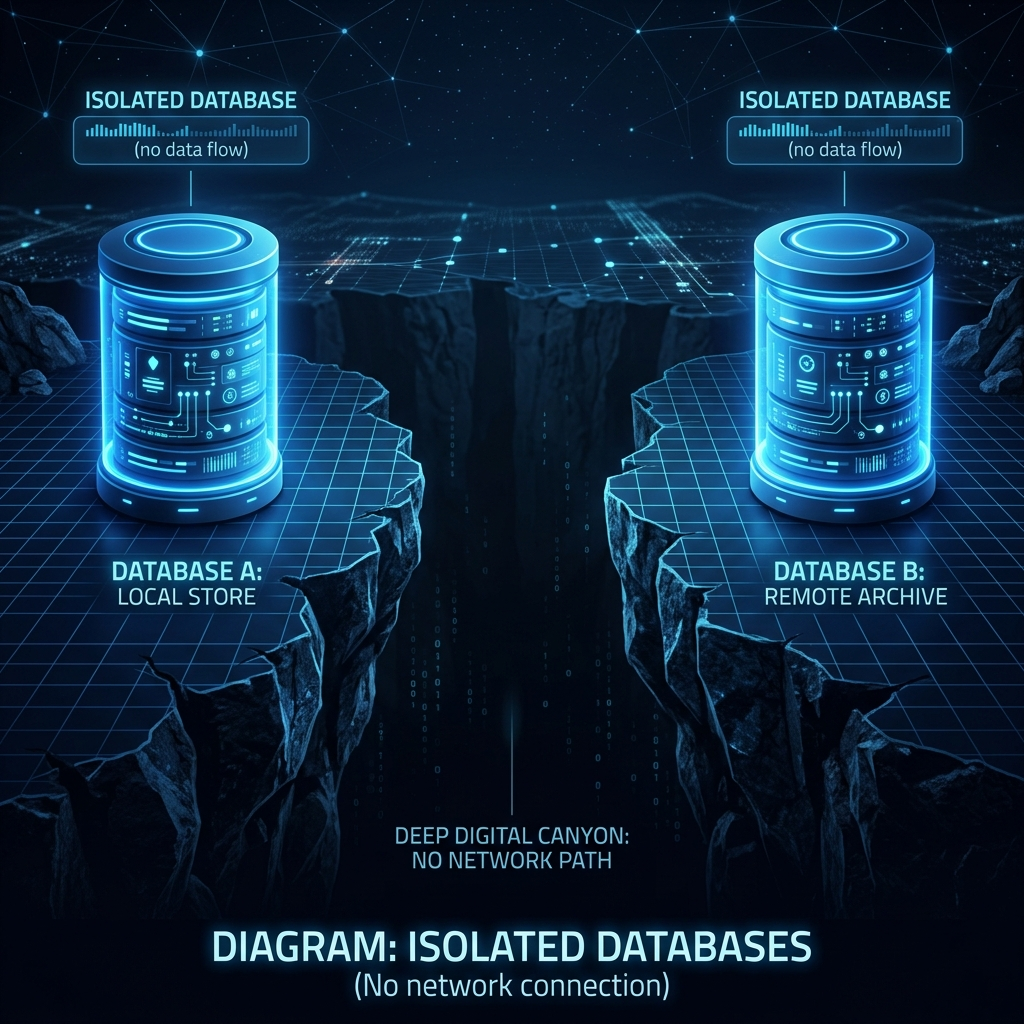
The Silo Paradox
Regulatory requirements dictate that patient or citizen records must remain isolated inside their specific compliance domains. A hospital’s financial database cannot simply index and read radiology scans at will. Yet, administrators and systems need a single unified view—a Master Person Index (MPI), which in HollywoodOS acts not just as a patient index, but as a person MPI, a lineage MPI, and a family MPI—to resolve identity without data drift or exposure.
Standard solutions suggest either copying data to a central location (high risk) or running real-time federated API searches (slow and brittle). HollywoodOS resolves this using **cross-domain genealogy** and **lineage-based entity resolution**.

How Cross-Domain Genealogy Works
Instead of storing raw fields (like names, SSNs, or addresses) centrally to match profiles, HollywoodOS maps the **genealogical lineage** of data events.
When an individual is registered inside a local clinic (Domain A), the record generates a mathematical signature based on event logs. If that same person has transactions in a land registry (Domain B), their file generates another signature.
Instead of matching the raw name or identity values directly, the HollywoodOS MPI processes the historical lineage logs (cross-domain genealogy):
- It identifies shared event clusters without ever exposing the sensitive content.
- It links separate records as branches of the same logical "genealogical root".
- It maps lineage-based transitions, allowing secure data lookups through cryptographic handshakes only when a governed rule permits it.
The Security Advantage
This model guarantees that if Domain A is compromised, the attacker cannot read Domain B's records because there is no central database. The identity index holds only cryptographic relationships—a lineage blueprint of how records relate, not the records themselves.
By resolving entity identities via lineage rather than central attributes, HollywoodOS lets institutions comply with the strictest privacy regulations while maintaining a zero-drift, unified system of record.